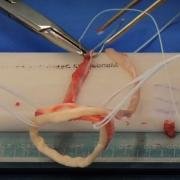
PCL reconstruction is generally undertaken using a hamstrings tendon from the same patient, which is folded to produce an appropriate length and width.
Posterior cruciate ligament (PCL) reconstruction involves using graft material to refashion and replace a damaged posterior cruciate ligament. Page updated April 2024 by Dr Sheila Strover (Clinical Editor)
PCL reconstruction is generally undertaken using a hamstrings tendon from the same patient, which is folded to produce an appropriate length and width.
"....Grade I (partial tear) - 1-5mm posterior translation. Tibia remains anterior to femoral condyles....Grade II (complete isolated) – 6-10mm posterior tibial translation. A complete tear of PCL without another injury. Anterior tibia flush with femoral condyles....Grade III (complete PCL with combined capsular and/or Ligamentous injury) - > 10mm posterior tibial translation. Tibia posterior to femoral condyles which may indicate a concomitant capsuloligamentous injury....."
However, when more severe tears occur together with other ligament or meniscus injury, then surgery is indicated.
"...Some studies have reported good outcomes after conservative treatment of partial PCL tears, while others have reported poor results at long-term follow-up with disabling symptoms and functional limitations...."
The surgeon may decide on a 'single-bundle' reconstruction or may attempt to better restore the anatomy with a 'double-bundle' technique, using the hamstrings tendons harvested from the patient.
"....Anatomic single-bundle PCL reconstruction....typically restores the larger anterolateral bundle....and represents the most commonly performed procedure....."