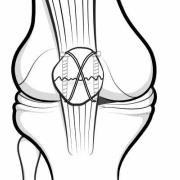
Fixation with cannulated screws.
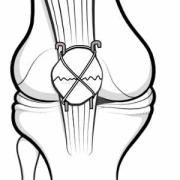
Fixation with tension band wiring.
Management of patellar fractures depends upon the number of fragments the bone has broken into, whether or not any fragments are displaced and also the integrity of the overlying skin. Page updated April 2024 by Dr Sheila Strover (Clinical Editor)
Fixation with cannulated screws.
Fixation with tension band wiring.
Open fractures carry the risk of introduction of bacteria, in which case the clinician may be reluctant to use metal fixation until the skin is healed and all risk of infection has passed.
"....Closed fractures of the patella represent the vast majority of this injury. However, up to 7% of the cases result in open fractures....The underlying mechanisms of open fractures are mostly high velocity accidents. These can result in devastating soft tissue conditions with comminuted fractures...."
The issue, though, is that the joint will be stiff once any plaster has been removed, and regaining range of motion will be challenging.
Instead the surgeon may use cannulated screws and/or modified anterior tension band wiring. Cannulated screws are hollow inside and can be slipped over a guide wire which is drilled through the fragments. Modified anterior tension band wiring comprises two parallel wires, with a figure-of-eight cable wrapped around them.
"....Patellar fractures are a diverse group of injuries and the fracture type varies considerably.....the goals of treatment have to aim for anatomic reduction, stable fixation with restoration of both....the articular surface and the extensor mechanism as well as the ability of early rehabilitation...."
"....In severe comminuted fractures, open reduction and fixation with small fragment screws or new angular stable plates for anatomic restoration of the retropatellar surface and extension mechanism results in best outcome...."
Normally this is not a problem, but if a long time has passed since the initial incident, it may be that bony callus has partly obscured the hardware and removal may be difficult.
"....Implant-related soft tissue irritation resulting in anterior knee pain and subsequent need for implant removal is the most common complication following metal fixation. The prevalence of such sequelae should be discussed with patients in order to temper expectations...."
Comminuted fracture, Patellar fracture, Patellectomy, Quadriceps lag