Back to Top

You are here

Autologous chondrocyte implantation

The word 'autologous' means 'from the same body'. 'Chondrocyte' means 'a joint cartilage cell'. So the procedure of autologous chondrocyte implantation (ACI) is to do with the implantation of a person's own joint cartilage cells back into their body.

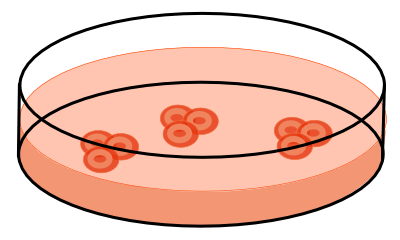
If there is a fairly substantial area of joint surface damage in the knee (usually on the end of the thigh bone - the femoral condyle or the patella - the kneecap), it is now possible to take healthy cartilage cells and send them to a laboratory for culture (where they are multiplied and make many cells), and then return them for implantation into the damaged area to grow into healthy cartilage.

ACI

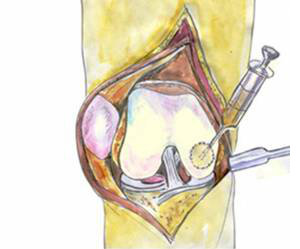
This means that there are two surgical procedures - one minor procedure to harvest the tiny fragment of normal material to go to the laboratory, and a second bigger procedure some weeks later to do the next step, the implantation.

The damaged area is surgically cleaned up, and then usually a bit of fibrous material (periosteum) is taken from a superficial bone like the shin bone and sewn over the defect, then the cells from the laboratory are injected behind the fibrous restraint, where they start to grow into a sheet of normal cartilage cells.

A similar procedure, MACI®, leaves out the painful periosteum step and uses another material onto which the cartilage cells are seeded and then glued into the damaged area.

ACI is part of an armamentarium of procedures which are now available to help repair the damage of early arthritis:

Other relevant resources on this site:

2009 - Increased failure rate of autologous chondrocyte implantation after previous treatment with marrow stimulation techniques

17 Jul, 2011

This is the editor's interpretation of a 2009 medical publication outlining a study that was undertaken by a team from the Cartilage Repair Center at the Brigham and Women's Hospital in Boston, Massachusetts in 2009.

Category: 

Advertisement

Subscribe to RSS - Autologous chondrocyte implantation
joinus
  • Latest
  • Blogs
  • Popular
  • Tags
The back of the knee is called the 'popliteal' region of the knee. The depression in the middle of...
Saturday, April 13, 2013 - 10:08am
The objectives of knee rehabilitation are: to protect the joint in the early stages from further me...
Thursday, April 11, 2013 - 6:25pm
Complex Regional Pain Syndrome (CRPS) is a rare chronic pain syndrome that may follow tissue injury...
Tuesday, April 2, 2013 - 2:01pm
Part 1 - Arthritis and knee replacement the concept of knee 'compartments' varus and valgus deformi...
Thursday, March 28, 2013 - 12:50am
Within the knee biomechanics and injury research programme at the University of Salford we have undertaken a...
Wednesday, June 5, 2013 - 11:23pm
The patella (knee cap) is exposed to incredibly high loads during sporting activities, and even activities...
Sunday, March 24, 2013 - 9:13pm
A heavy duty table tennis table fell onto my wife’s knee severing the quadriceps tendon, not completely. The...
Tuesday, December 4, 2012 - 2:27pm
Hi, I'm sarah fresh from medical school and I'm a year older today. Used to have tibia varum(blount's...
Sunday, November 25, 2012 - 5:52pm
The back of the knee is called the 'popliteal' region of the knee. The depression in the middle of...
Sunday, June 29, 2008 - 9:43am
This phase is immediately after injury or surgery. Focus is on: wound management protecting the lim...
Wednesday, March 26, 2008 - 7:32pm
Joint cartilage damage in the knee must always be taken seriously, as the problem may progress to t...
Thursday, June 30, 2011 - 4:02pm
The 'Primers' are pages of basic knee information, collected together into individual 'textbooks',...
Thursday, March 13, 2008 - 2:30pm

Advertisement

-A A +A

Word of the Day

The KinCom isokinetic machine is a sophisticated apparatus for both exercising the knee and for determining various parameters of muscle strenth.

User login